
|
|
|
|
Advanced Tips for Weeding and Other Applications
| |||||||||||||||||||||||||||||||||||||||||||||||||||||||||||||||||||||||||||||||||||||||||||||||||||||||||||||||||||||||||||||||||||||||||||||||||||||||||||||||||||||||||||||||||||||||||||||||||||||||||||||||||||||||||||||||||||||
 |
Advanced Weed Twister User - More Efficiency and Safety
| ||||||||||||||||||||||||||||||||||||
|
Expert Weed Twister User - Special Techniques to Improve your Skills
| ||||||||||||||||||||||||||||||||||||
|
Master Weed Twister User - More Advanced Techniques and Multi-Tasking Applications - The Teacher
|
The more you use the tool, the more special techniques you will learn on your own. Here we are sharing the techniques we have learned over the years and that others have learned and shared with us.

An Advanced Weed Twister is a highly skilled user, able to use the WEED TWISTER in more ways, and more skillfully than the Expert Weed Twister. If you are new to the WEED TWISTER experience, you may be able to advance your techniques to the next level by acquiring the skills and applications listed here. Most of the techniques at this level can be learned without instruction just by experimenting with the WEED TWISTER.
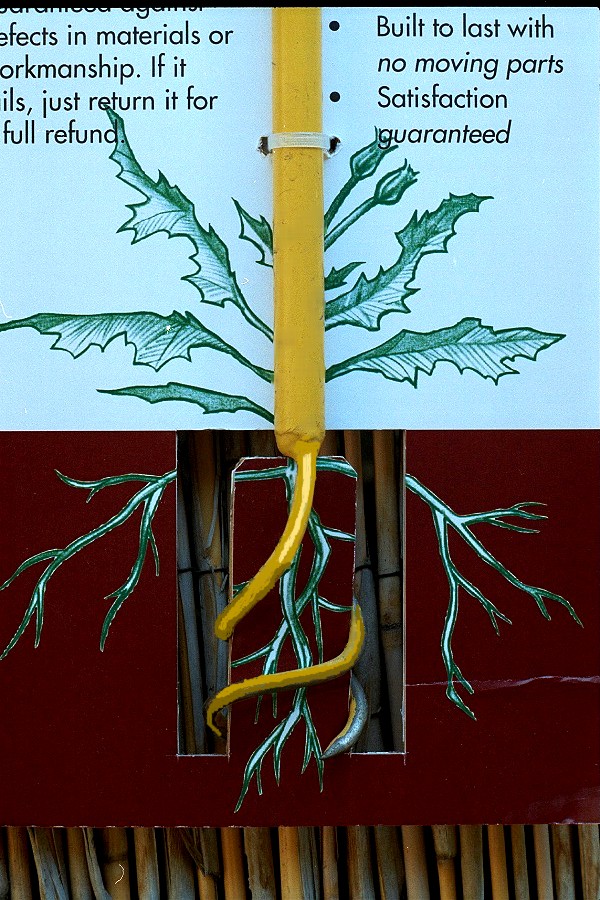
Twisting and Lifting: The first question most users have is when to stop twisting? and when to start lifting? How do I accomplish complete root removal? You will soon discover that you will see the weed begin to turn when it is loose and you will also feel the tension on the tool relax. The twisting motion loosens the soil that holds the root fibers in place. Once the root fibers are loose, the whole plant begins to turn within the coils. It's usually best to let the plant do the twist dance with your tool and make a couple of complete rotations to make sure it's ready to go. That's the best time to stop twisting and start lifting! This will also present you with a prize for your efforts when you see the entire root structure face the light of day!
Root Placement:
Where's the root? As you work with weeds, you
will learn that not
all roots are pointing in the angle where you think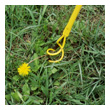 they should be. Of course, in most cases, the
obvious place to start is directly vertical beneath the plant. If you place the
coil directly atop the plant and point it straight down into the soil, the
root will be directly engaged and loosened. This approach is the basic
or Vertical Attack, also known as the Dive Bomb Attack.
This technique works in 90 percent of all situations. However, a few weeds
may have found a
wayward route to get from seed to soil surface or to tap into moisture
sources. The best technique
for hard-to-find roots is
to probe the area surrounding the weed with the WEED TWISTER to
discover the direction of the root. The vertical attack works
effectively with roots that penetrate deep into the soil. In the Expert Weed
Twister level, you will learn about other approaches that work in different
situations, such as the Angular Attack and the
Torpedo.
they should be. Of course, in most cases, the
obvious place to start is directly vertical beneath the plant. If you place the
coil directly atop the plant and point it straight down into the soil, the
root will be directly engaged and loosened. This approach is the basic
or Vertical Attack, also known as the Dive Bomb Attack.
This technique works in 90 percent of all situations. However, a few weeds
may have found a
wayward route to get from seed to soil surface or to tap into moisture
sources. The best technique
for hard-to-find roots is
to probe the area surrounding the weed with the WEED TWISTER to
discover the direction of the root. The vertical attack works
effectively with roots that penetrate deep into the soil. In the Expert Weed
Twister level, you will learn about other approaches that work in different
situations, such as the Angular Attack and the
Torpedo.
Skin or Gloves: For more than a random attack on a weed or two, it's recommended that you wear gloves when using the WEED TWISTER. The rubber grips on the handle will protect your skin when twisting, but gloves will give you more protection and also make it easier to pull the weeds from the coil after lifting. Any type of gardening gloves will do. Also, see the Safety and Ergonomics information below.
Coil Clearing: There are several simple clearing techniques to take the weeds from the coil and dispose of them in a waste container. Tapping the coils on a hard object or ground will loosen any plug of dirt that remains in the coils. Once the plug is released, the standard technique is the Pull and Unwind technique of grasping the weeds in the coils with one hand and pulling away from the tool. With the other hand turn the handle in the counter-clockwise direction. If you have a trash container handy, you can tap the coils over the container and the debris will be disposed of in one quick move! Below you will learn about the advanced techniques of Yanking and Wanding.
Tilling, Gouging or Twisting: Sometimes it's more efficient to till a weed loose from the soil instead of twisting it. If the weed is just beginning to sprout with roots of only an inch deep or so, it's probably best to gouge the weed from the soil without twisting. If the soil is loose or moist, very little effort may be needed to simply push the coil into the soil and uproot the weed. If there are several seedlings in the area, you can slide the coil forward and backward with a stroke of about one foot and uproot all the weeds in the coil's path by the tilling process. In this sense, gouging refers to removing one weed at a time by pushing the coil into the soil without twisting. Tilling refers to sliding the coil with a forward and backward stroke of about one foot to uproot numerous weeds in its path. With experience, you will learn how easy it is to switch between twisting, tilling and gouging as the need arises. More details about tilling techniques are presented in Quick Tips.
Thorns and Cactus Plants: Weeds
have a tendency to snuggle between thorny plants and cacti. By taking
careful aim, you can tag your weed without touching the thorns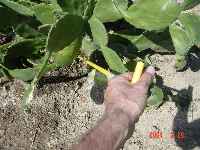 with your
hands or arms. You can also use the tool to
pick up cactus leaves that
you have trimmed or that have fallen to the ground. Using
longer models of the tool such as the
60-inch Weed Twister allows you to reach more deeply between or
underneath thorny plants with a greater margin of safety. This safety margin is also important for removing
poison ivy or poison oak and similar noxious plants. Be sure to wash off the tool after placing it in contact with poisonous
plants.
with your
hands or arms. You can also use the tool to
pick up cactus leaves that
you have trimmed or that have fallen to the ground. Using
longer models of the tool such as the
60-inch Weed Twister allows you to reach more deeply between or
underneath thorny plants with a greater margin of safety. This safety margin is also important for removing
poison ivy or poison oak and similar noxious plants. Be sure to wash off the tool after placing it in contact with poisonous
plants.
Safety and Ergonomics: It's not every day you can find a tool to match your weeds AND your needs! The Ergonica Weed Twister is a safe and ergonomically friendly hand tool when used as intended, especially when the correct length is selected according to the plant placement and the user's height as described below. When compared with the standard hoe of any handle length, the Weed Twister is less stressful for muscles, bones and joints of the shoulders, back, hips and knees, as described below. The long handles from 36 to 60 inches in length help to protect your back and limbs from the excessive stress normally associated with weeding by hand or using short-handled weeders and knives. The coils are pointed and sharpened and potentially dangerous if used carelessly. Children may be intrigued by the design of this tool and may volunteer to help. If the children are old enough, be sure to guide them as they learn about gardening and how to help out with the chores of the household. Also, see the section above on Skin or Gloves.
For the most effective use and ergonomic value, the length of the tool should be matched with the height of the user and the distance from your path to target weeds. The unique patented coil design of the Ergonica Weed Twister, which applies to all models and lengths, is effective for short and lengthy roots as deep as 12 inches or more and a diameter as wide as 2 inches. As a rule of thumb, the Weed Twister T-handle of the 36-48 inch models should be about the same level as the chest or elbows of the user. For precise tilling or working away from your path, the length may be 6 to 12 inches longer to give you a comfortable reach. Use a tape measurer to measure the distance from your elbows at rest to the bottom of your feet, or simply use the standard chart below based on height. Shallow water-pond weeding requires longer reach which can best be supported by 48 - 60 inch lengths. See table below for standard recommendations based on user height and distance to reach from path to target weeds. In general, for every 12 inches distance to reach, add 6 inches to the length of the tool. This formula assumes a diagonal angle to the target. If you need to reach directly overhead or deep over a ledge or into a pond, the length to add should be greater. The 60 inch model is also recommended for wheelchair access as described below this table. Some customers buy several models including a T-Handle Model and a Drill-Ready TurboTorx Model to suit their needs in various situations.
Unlike many other weed pullers and poppers that require pushing a
lever with your foot, for example, the Ergonica Weed Twister can be used to
remove weeds by their roots
(as deep as 12 inches or more) located a considerable distance from your path.
Great for pulling weeds under brush or close to thorny cactus plants and
brambles, as well as poison ivy and other toxic plants, in addition to lawn
weeds underfoot like Dandelions. No
foot levers or hinged tines that often break loose with repeated use! Use
the Drill-Ready TurboTorx models to efficiently attack patches of unwanted
Bermuda Grass, Crabgrass and other grassy weeds or vines with prostrate
stems.
|
Recommended Ergonica Weed Twister Tools* Length By
*Ergonica Weed Twisters: Model T = T-Handle Models, Model H = Hex Bit Drill-Ready TurboTorx Models For larger roots or tough soil, the optional T-Handle 8-inch Extension Kit is also recommended Easy Assembly Instructions
|
Which Ergonica Weed Twister Models are Best For You?
|
||||||||||||||||||||||||||||||||||||||||||||||||||||||||||||||||||||||||||||||||||||||||||||||||||||||||||||||||||||||||||||||||||||||||||||||||||||||
In comparison, most hoes require a longer handle than the Weed Twister (and more weight) due to the angle of the blade and the need to swing or pound the hoe into the soil. This results in added stress due to the handle weight and the need to bend your back to swing the hoe. Even a long 60 inch hoe usually requires you to bend your back to swing the hoe blade vertically into the soil. Compared to the hoe, the Weed Twister uses more arm and wrist muscles and less shoulder, back and leg muscles. The Weed Twister is likewise less abusive of the bones and joints of your shoulder, back, knees and legs than is the common hoe of any length. Please review special safety instructions for the Drill-Ready Weed Auger TurboTorx models. By the way, in case you're wondering about an extendable telescopic design, this alternative is not feasible within reasonable costs due to extreme torque pressure requirements. The current models, built with minimal moving parts and high quality materials, are built to last for many years when used as intended.
For Wheelchair Gardeners, a longer length is helpful to reach areas away from your path. With raised beds, however, the 36-inch model may be the optimum length, assuming your wheelchair path is close to the raised bed. Paraplegics with strong hands and arms may be able to handle the extra weight and manipulation of the Turbo Weed Twister. You can also reach up to pick fruit with a 48-inch Weed Twister or the newest 60 inch Weed Twister, designed especially for wheelchair access. The 60-inch model weighs only 2 pounds, making it easier to use for people with limited arm strength.
Plumbers may also like the 60-inch Weed Twister to dig out roots in pipes that snake tools can't grab.
If the tool length is too short for you, you will still be able to work effectively, but will need to stoop more and place more strain than necessary on your back muscles and bones. If the handle is higher than your neck, you can still work effectively by approaching your target plants from an angle. When working with deep roots, a longer handle allows you to twist deeply into the soil without stooping. Ergonica also offers an optional 8-inch T-Handle Kit for working with deep roots in tough soil to allow you to more comfortably twist with both hands. If you have several willing workers in your home or farm, we suggest you buy several different models based on the height of the workers and the types of applications needed. It's a good idea to warm up your arms and legs by stretching and walking for fifteen minutes prior to doing any kind of vigorous yard work.
Weighing in at less than 2 pounds, even the 48-inch Weed Twister is almost a pound lighter than most other tools of the same class. This allows you to work with pinpoint accuracy while experiencing less stress than with heavier tools. Careful ergonomic engineering results in more punch per pound for this amazing tool. Like a ninja weapon, you will appreciate the deft power of this tool, especially when facing a bumper crop of uninvited weeds and misplaced plants in your yard!
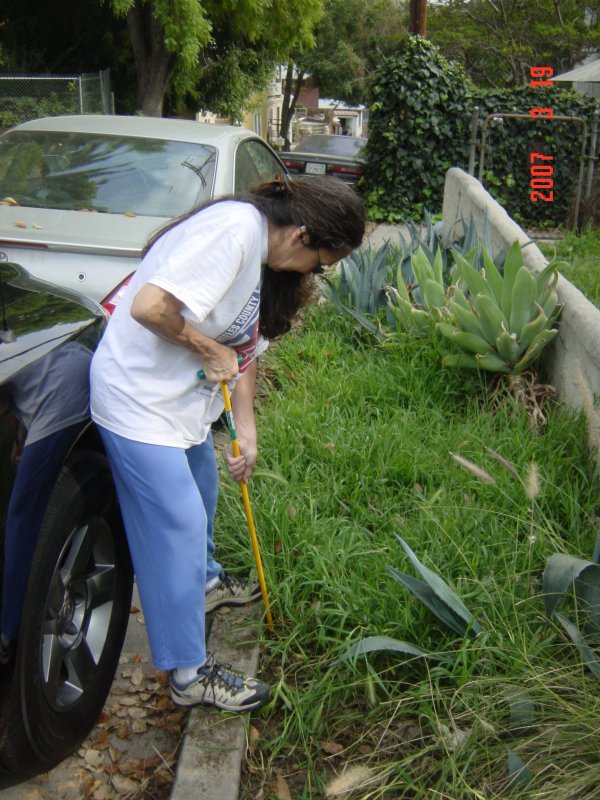
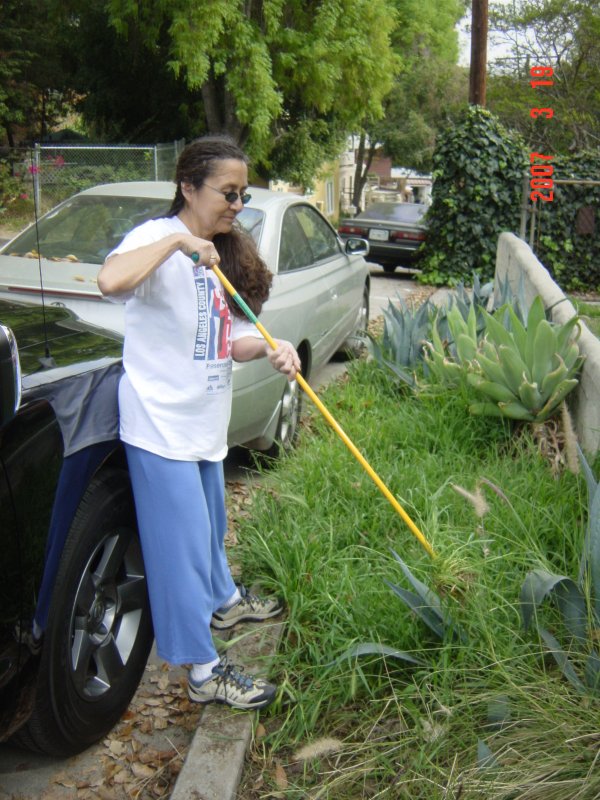
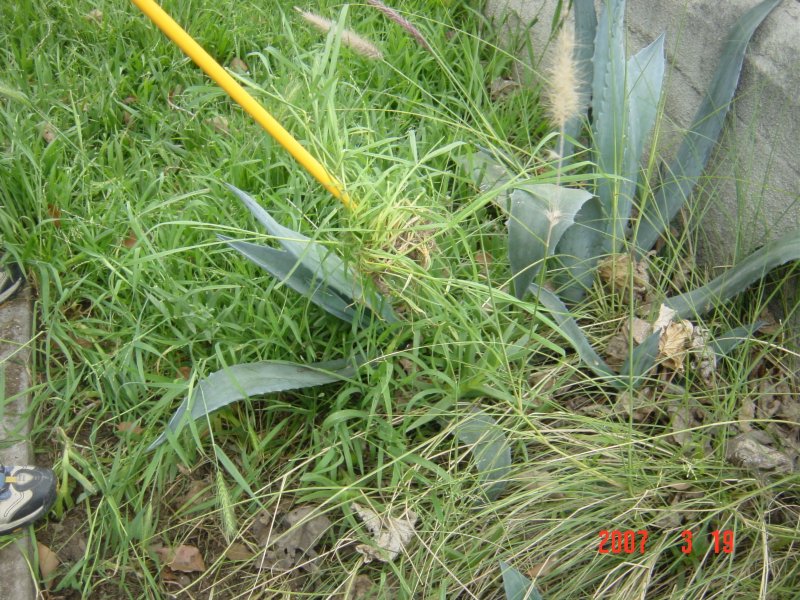
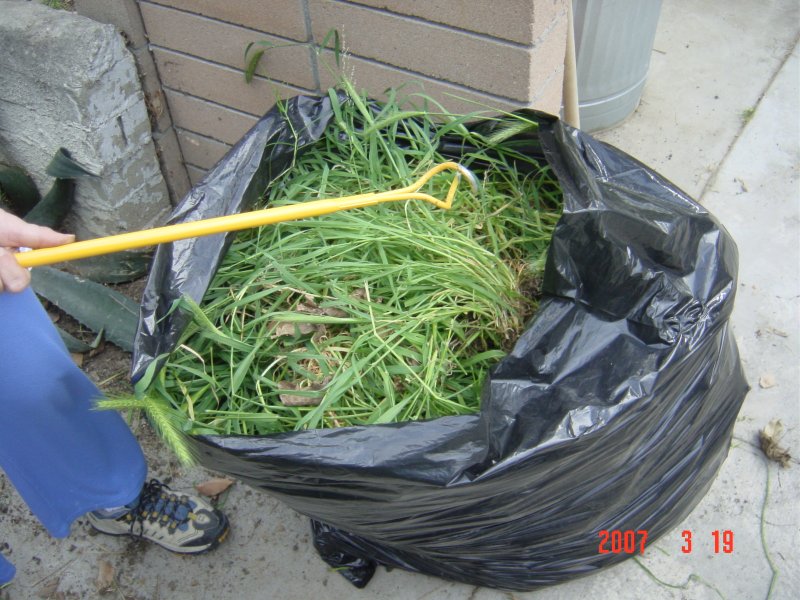
Below you see one of our neighbors, an Expert Weed Twister, using the 42-inch Weed Twister to pull out wild oats which grew quickly next to a cactus plant. Lydia is of average height and has recently upgraded from the original 36-inch model to the 42-inch model in order to extend her reach to weeds and debris away from her path. Click on the images for larger views.
|
|
|
|
|
If you don't own a WEED TWISTER, see the WEED TWISTER page for more information.
Musings of Dr. Yucca: Let your garden thrive! A safe and sane delight.
Pricing, Models and Discount Offers!
Direct link to this page: www.weedtwister.com/advanced.htm