
|
|
|
|
TURBO WEED TWISTER- MORE POWER-SPEED-EASE
... AWESOME PLUS QUALITY! See
Videos |
TurboTorx 36 Weed Twister - New TurboTorx 42!
|
Video of Turbo Weed Twister vs. Bermudagrass Weeds
|
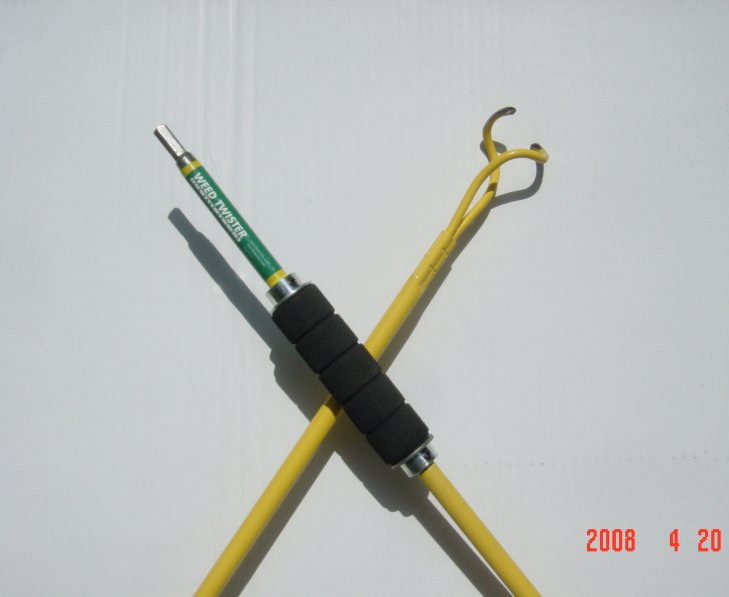
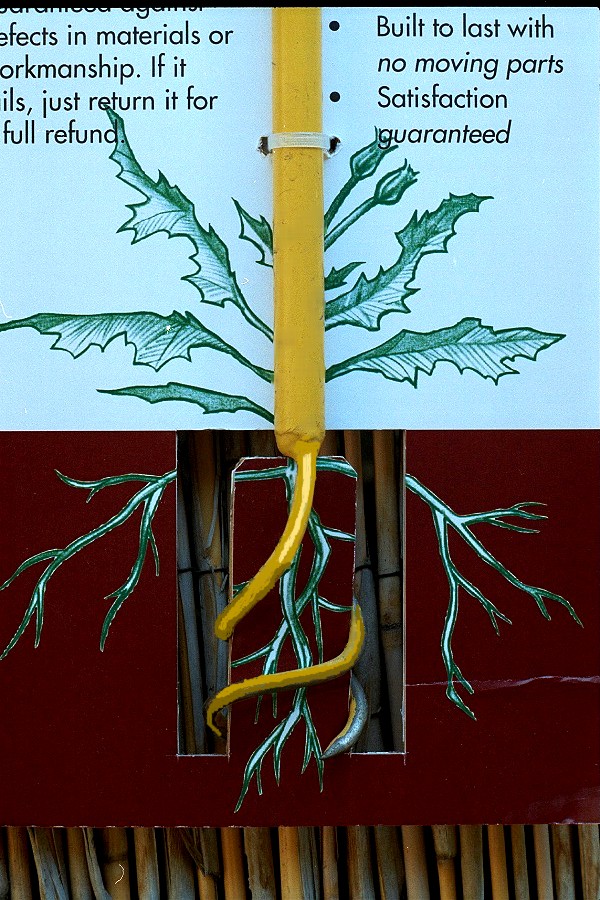
Pulls out plants weed whackers-string-trimmers-eaters and augers leave behind! A great string trimmer helper tool. Step 1: Trim off the stems of weeds efficiently with your favorite string trimmer (we recommend cordless trimmers with at least 40 volts). Step 2: Use your Turbo Weed Twister to completely extract all biennial or perennial weed roots. Step 3: Use mulch covers or other barriers to reduce the opportunity for annual seeds to see the sun next year. In addition to the unique patented double coils featured in other Ergonica Weed Twister models, this drill weed remover, root extractor tool includes a 3/8-inch hex bar drill bit (requires 1/2-inch chuck) and a special foam rubber Sleeve Grip on a 36-42-inch shaft. The 5-inch Sleeve Grip, with a sturdy PVC bushing, allows you to focus the direction of the twisting action with precision and ease, and gives you added leverage for pushing into the soil and lifting up the tool with roots and all for easy disposal. Entire unit weighs only 1 lb - 6-10 oz, making it possible to clear large areas with little fatigue. The added weight of your drill can be balanced comfortably with the Sleeve Grip or with an optional horizontal grip that comes with many heavy-duty professional drills. Taller people (5' 10" or more) may work more comfortably with the 42" model. Compared with weed augers and hoes, this unique tool twists out more roots while disturbing less soil to better accommodate the needs of organic farming and sustainable garden practices.
Your drill must have a 1/2-inch chuck for twisting the TurboTorx 36 or the TurboTorx 42 Weed Twister. This is a heavy-duty tool that works best with industrial-quality power tools, including the hammer or impact types when working with very tough soil and rocks or gravel. To get the best results, drills with multi-speeds, variable clutch and reversible direction should be selected. A variable clutch and hammer drill option will also help to protect your drill from overheating in tough soil. To avoid damage to the TurboTorx tool (and your hands), set your clutch to a torque level no greater than 25 ft. lbs (300 in. lbs.). This is about half the maximum torque power provided by many industrial tools today. To be safe, set the clutch and speed to the lowest levels for testing. Most large and deep roots, even in clay soil, can be quickly removed with this amount of torque power or less. See Makita BHP454 specifications for useful calibration charts and comparisons with competing models. Professionals will want to have an extra battery that often comes with a heavy-duty drill kit such as the 1/2 inch cordless drill kits offered by top brands. Use the Amazon.com offerings as a guide for pricing when shopping at your local hardware store. More guidance on selecting the best drill for garden augers and twisters in general is provided at the Ergonica Weeder Features website.
Soaking the soil or a good rain the day before, especially if soil is compacted, will make your job with the Turbo Weed Twister, or other weeding tools, much easier. At a minimum, soak the soil at least 2 hours before you work it.
Protect your eyes with safety goggles whenever using fast rotation drill speeds in the soil. Use your drill's clutch system to protect your tool and your hands from excessive torque pressure - especially with large roots. To penetrate tough or rocky soil, push gently into soil after coils have started twisting. Wear steel-tipped shoes or boots to protect your feet. Do not allow children to play with this tool or to be near the area where this tool is applied. Whenever digging deeply with any tool, be cautious about the location of underground utilities, conduits, pipes, irrigation tubes, etc..
Small SeedlingsThe Turbo Weed Twister rips out small seedlings by their roots in a snap, without having to gouge out large volumes of dirt. Place the coil tips about 2-3 feet ahead of you and pull the coil from right to left in a diagonal motion. Apply pressure with one hand on the drill handle and the other on the sleeve grip. Use the sleeve grip to push down for depth and to pull up when removing roots for disposal. Small seedlings that have not blossomed may be left on the soil after extracting their roots without fear of resprouting. If the soil is loose, it may be possible to zigzag and quickly cover a large area without lifting the tool above the soil. Turbo Weed Twister vs. Standard Hoe: In addition to the great advantage of speed, the sleeve grip with drill-powered twisting gives you more leverage and extra precision and is kinder to your back, hands and arms than using a conventional hoe. The weight of the Turbo Weed Twister, sleeve grip and all, is less than two pounds, even though it's made of high strength steel, which is much lighter than a hoe with a long wooden handle. The weight of your drill will be balanced between both hands, one on the drill and the other on the sleeve grip. Turbo Weed Twister vs. Weed Augers: Weed augers and other drill weeders make larger holes and are not as effective in grabbing and lifting roots for disposal like the precise Turbo Weed Twister. These augers are generally hard to control with a bit or shaft greater than 24 inches. |
Crabgrass, Bermudagrass, PurslanePlace the coil at the center of a cluster of grass you wish to remove. Apply pressure to penetrate the soil and pull the trigger. Use a high speed on your drill to remove each cluster quickly. Lift up debris in the coil and place in a waste container by reversing the direction of the drill. If the grass doesn't seem to be twisting with the tool, just reposition the tool to find the central cluster of roots. If there's a plug of dirt in the coil, tap the coils on a hard object or the ground surface to release the plug. Once the plug is released, the remaining grass stems and roots in the coils can be easily unwound and removed. Often they will simply fall out with gravity or by reversing the rotation with your drill. See examples on the Bermudagrass page. Terrific lawn-conversion tool to remove any existing lawn! After several large clusters of grass or purslane have been removed, drag the coils like a hoe under the surface of the soil to "fish" for more strands of roots and rhizomes. This is the easiest way to quickly clear unwanted grasses with roots and lateral stems that grow beneath the soil. Follow-up cleansing of the same area every 2-3 months will eventually remove the grass entirely in about a year. Remember to fish with the Weed Twister when cleansing in suspected areas just to be sure no hidden prostrate stems and rhizomes are lurking around as they are prone to do. Because of the coil design, and the twisting power of your drill, this cleansing operation is much more efficient than trying to cleanse with a hoe or other tools. Lawn Repair: Small holes in lawns can be patched up with a little compost. For larger holes and gaps, reseeding is recommended. |
Short Taproot WeedsSmall dandelions and other plants less than a foot above the soil can be attacked from the top. Position the coil directly above the plant with the main stem in the center. Push down and pull the trigger of your drill. Continue twisting until you see the entire plant twisting with the tool. Once it starts to do the "twist" dance, continue twisting for two or three more rotations to be sure that the root has been separated from the soil. Using a slower drill speed will help you find the roots without unnecessarily disturbing a lot of soil. Lift the tool with the sleeve grip and the entire root and plant will be removed. If there's a plug of dirt in the coil, use the tap method described below to release the plug. Once the plug is released, the remaining roots and stem will come out with a gentle tug or simply by reversing the direction of the drill or by waving the tool in a counter-clockwise direction. Placing it over a trash container and tapping the edge of the container will save you the extra step of disposing of the removed material.
|
Taller PlantsFirst, hook the coils at an angle into the base stem of the plant just above the soil. Then, elevate the angle of the handle to a vertical position and center the plant stem into the coil before pulling the trigger of your drill. The tool should be pointing in the same direction as the stem with the stem in the center to be sure that the root system is attacked. Continue twisting until you see the entire plant twisting with the tool. Once it starts to do the "twist" dance, continue twisting for two or three more rotations to be sure that the root has been separated from the soil. Lift the tool and the entire root and plant will be removed. When lifting deep roots in difficult soil, your drill may stall due to the resistance. A more powerful drill will allow you to extract larger roots in tough soil. Use your drill's clutch system to protect your tool and your hands from excessive torque pressure (set to less than 25 ft. lbs. (300 in. lbs) of torque. A hammer drill will give an extra percussive force that is helpful especially in tough soil. Use slower speeds for larger roots. See the example of Tree of Heaven removal and the Deep Hole Twisting Test below.
|
Weed Height: the height of a weed is not an issue with the Weed Twister. If you can center the base stem of the weed into the coil as described at the beginning of the Taller Plants advice, the Weed Twister can do the job! In some cases, the roots may bend in directions that vary from the stem. In this case, you may need to change the angle of attack to find the correct root direction. In difficult cases, use the tool to probe the roots and locate root extensions. The maximum diameter of a root that can be effectively removed by the Weed Twister is about 1.5 - 2 inches. There is no limit to the length of the root for effective removal by this tool. Some of the Tree of Heaven roots as shown on the Weed Twister vs. Tree of Heaven page, for example, have roots nearly two feet in length. This is a unique feature of the Ergonica Weed Twister.
Tap Object: When working in moist soil, often a plug of dirt will accompany the roots in the coil after lifting from the soil. A quick tap against a hard object will drop the plug of dirt, leaving the roots and stems loosely engaged in the coil. The tapping object can be a nearby tree, rock, wagon, landscaping surfaces, or the wooden handle of a large hoe, broom or shovel. If no hard object is available, you can also bounce the coils on the soil or lawn surface with the same effect, but perhaps requiring a little more effort. If a trash container or wagon is nearby, you can tap the coils over the container and the entire contents will drop right in. Quick and easy! Once the plug is released, you can reverse the drill's rotation or use a "wanding" (circular waving) motion in a counter-clockwise direction and the debris will fall out by gravity. That's why we call this the Magic Wand of Weeding! Smaller Weeds and Seedlings that are hoed or scooped up by the Weed Twister require no lifting, tapping or collecting and can be harmlessly allowed to dry and die on the surface of the soil.
If you are working with weeds that have flowers or fruits, be careful not to spread the seeds. Try not to wave or move the plant debris over the soil any more than necessary. By keeping a trash container, wagon or other receptacle nearby, you can ideally move the debris directly into the container. Placing a tapping object in a safe place, away from clean soil, will also help to reduce the spread of weed seeds. After your work is done for the day, clean the Weed Twister with water to remove any remaining weed seeds that may be very difficult to see. You should also use water to clean the soles of your shoes.
Although some people have successfully filed down the size of the drill bit of this tool to fit into a 3/8-inch chuck, we don't recommend it. Main reason is that the work you need to do for removing deep roots or large crabgrass bunches repetitively requires more power and durability than the standard 3/8-inch drill is designed to provide. Putting heavy torque stress repetitively on a smaller drill motor beneath the industrial quality standard may eventually result in burning out the motor itself.
Your Weed Twister will help you learn more about weeds, plant roots, soil conditions and how to become independent from harmful herbicides. The efficiency of this tool will soon make dangerous chemicals in the garden or farm obsolete. By using this tool, you will soon become an expert on the shape and strength of whatever plants you probe in the Fourth Dimension, the space we usually take for granted: underground. In a way, you will be able to sense and see the shapes of plant fibers in the soil. You will also learn a little about the dynamic interaction of different shapes of tools against the shapes and fibers of plant roots and underground stems. Although your Weed Twister has an intelligent (but simple) design, to use it intelligently requires a learning process for every person. This learning occurs not only in your brain, but in your fingers, hands, arms and total being, as well. This learning, by the way, never ends.
See the Agriculture page for more information on using the Industrial Weed Twister for agricultural applications.
See the Advanced Tips page for several other Weed Twister applications and techniques.
Musings of Dr. Yucca: Let your garden thrive! A safe and sane delight.?
If you don't own a WEED TWISTER, see the WEED TWISTER page for more information.
The direct link to this page is www.weedtwister.com/weed_twister_turbo.htm.
Copyright © 1999-2017 Ergonica. All
rights reserved.
Revised:
April 5, 2015 .