
|
|
Special crops require the use of special tools to protect them against weeds left behind by cultivation, chemical treatment, hand weeding, hand rogueing, hot capping or flaming, and other, less effective, applications and hand tools. The Ergonica Weed Twister was designed to more efficiently penetrate the soil with a minimum of soil disturbance and extract deep roots of various shapes and sizes more precisely and efficiently than other hand tools and weeders, including various hoes, weed pullers, weed poppers and other weed twisters. As California, along with other states, is embarking on a new era in agriculture when traditional methods of hand weeding are being reexamined and new alternatives for precision weeding and the short hoe are being explored, a greater emphasis on creative tool design is mandated. A tool, such as the Weed Twister, which promises to provide powerful deep root extraction as well as efficient precise hoeing and tilling, is causing much excitement in the agricultural community. Much of this excitement is the result of a legacy of conflicts between the health of farm workers and the growers' demands for efficient and precise weeding. After the short hoe was banned in 1978, farm workers were forced to remove weeds by hand for many hours a day. Some would argue that this was more damaging to the health of farm workers than the use of the short hoe. Recent litigation between the UFW, represented by CRLAF, and California growers has climaxed in Cal OSHA regulations that not only prohibit the use of the short hoe but also severely restrict the use of hand weeding. Machines are working, but people are broken!
Enforcement of safety regulations in California agriculture has recently (2008) led to 28 inspections on January 23 and 24 and the issuance of 26 violations totaling $12,750 in penalties, as reported by WorkersCompensation.com. Employers were cited for not paying minimum wage, failing to provide sufficient meal and rest periods, inappropriate operation of driverless tractors and operating tractors with defective seat belts. Citations were also issued for failure to provide adequate tools for hand weeding, not providing adequate toilets on site and having drinking water too far away from work areas. These citations were issued by the Economic and Employment Enforcement Coalition (EEEC) in Imperial and Riverside counties. The EEEC is a multi-agency task force designed to root out California’s underground economy by enforcing California labor laws, and educating business owners and workers about those laws and regulations in workshops held regularly statewide. Clearly, the organic farming industry does not need to be labeled as anti-herbicide and pro-homicide, given that their consumers are likely very conscientious! The organic standard is an important contribution to higher quality and safer foods. Perhaps, there also needs to be an additional voluntary 'labor kind' standard for farms and employers defined by the way they treat their workers, a standard that goes beyond the minimal labor codes and includes consideration for the feelings, pains and remuneration of workers? Studies in some parts of the world such as Africa, for example, have documented a cultural preference for short-handled hoes despite the resulting discomfort and health hazards for female workers. Sustainable agriculture should also mean sustaining the health, prosperity and human dignity of every hand that touches our food. The tools employers choose or don't choose can either empower or enslave our human resources. A number of other weeding machines images are presented by the European Weed Research Society including the rotary hoe, flexible chain harrow, spring tine harrow, Lilliston rotary weeder, horizontal-axis brush hoe, vertical-axis brush hoe, compressed air and brushes, finger weeder and torsion weeders. None of these machines is based on human sacrifice. Three new cultivation tools were recently compared (year 2007) with a traditional between-row cultivator, an herbicide control, and the conventional herbicide-plus-cultivator weed management program used in a first-year strawberry (Fragaria xananassa) planting. The new implements were (1) a Rabe Werk flex-tine harrow, (2) a Buddingh finger weeder, and (3) a Bärtschi brush hoe. This study showed an improvement in productivity when using certain cultivators for situations in which labor is scarce. Organic growers, and growers who plant in nontraditional annual systems, may benefit from their use as well. An abstract of this study was published in HortTechnology 17: 9-141 (2007) under the title Cultivation Tools to Reduce Hand Hoeing in Matted-Row Strawberries, with authors Mary Jo Kelly, Marvin P. Pritts and Robin R. Bellinder, Department of Horticulture, Cornell University, Ithaca, NY 14853. This study, unfortunately, did not endeavor to compare the efficiency of various hand hoeing tools for this application. Such a comparison in scientific measures would be most useful to farmers of various vegetable crops as well as to the organic farming industry in general. Can classical music help to control weeds and pests? The green revolution may have outlived its initial impetus but the music revolution may be the next big thing in agricultural innovation. For two brothers in Punjab playing music to their crops has produced a bumper harvest and with fertilizers and pesticides wrecking havoc on the soil this might be a viable and entertaining alternative. These two brothers of Sangrur district in Punjab, for the last 2 years have not used any pesticide for their crop grown on a 6-acre land. Instead, they decided to treat their crop to a dose of music. They claim the yield has gone up by 5 per cent but more importantly the quality has been phenomenally well. This remarkable innovation was reported by NDTV.COM in January, 2008. Unfortunately, the article doesn't tell us whether Mozart, Chopin or Bach was more effective? Beyond the legal, moral and health issues, the ongoing needs for better efficiency and sustainable agriculture energize the movement for technical advances. Because of its power and precision, as well as an ergonomic, light-weight design, the unique Ergonica Weed Twister is being regarded by many experts as an essential tool for every farm and garden where exceptional care is a must. Although hand weeding has long been considered the most precise manner of protecting crops, Ergonica presents a challenge to a higher level of surgical precision by using a tool that more effectively removes weeds that are often left behind by hand weeding methods. Whether weeding strawberries or other cash crops, removing volunteer potatoes or stubborn mallow weeds, or harvesting truffles worth over $100 per pound or $300 per ounce at some consumer markets, surgical precision in an efficient and ergonomic framework is an ideal standard that the farming industry should ultimately expect. Weeding and propagating are essentially the two principal arts of agriculture:Unless you grow crops in the desert or in
artificial platforms, before you plant or germinate your crop, you must clear
the existing vegetation, whether it is native or introduced. Thus, agriculture
may be seen as the art of nurturing and separating preferred plants in a
selected area from the undesired plants that thereby become identified as
'weeds'. The designated weeds may be relatively useless plants or sometimes,
unfortunately, native flora and forests of value to other parties and species as
well as to the regional ecology. Effective separation and selective nurturing
become critical due to the economies of space, time and resources.
According to a study by P. W. Owston and L. P. Abrahamson hand weeding has been the mainstay of forest -nursery weed-control programs. Amounts reported vary from 1 to 80 person-hours per acre over an entire season, the variation resulting from differences in weed populations, management philosophies, and other practices.
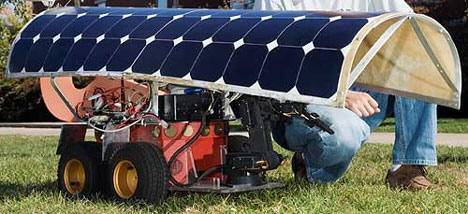
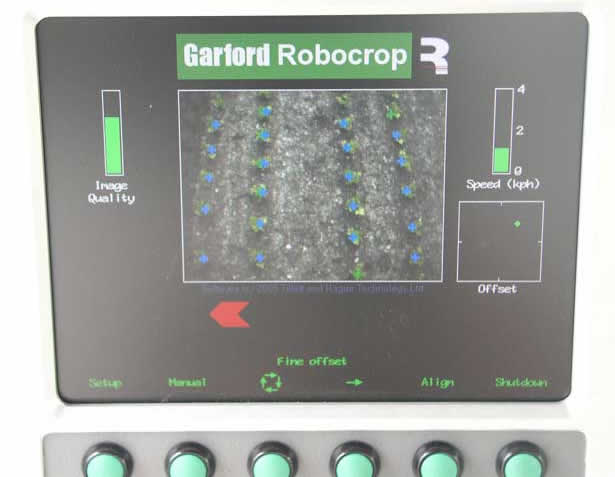
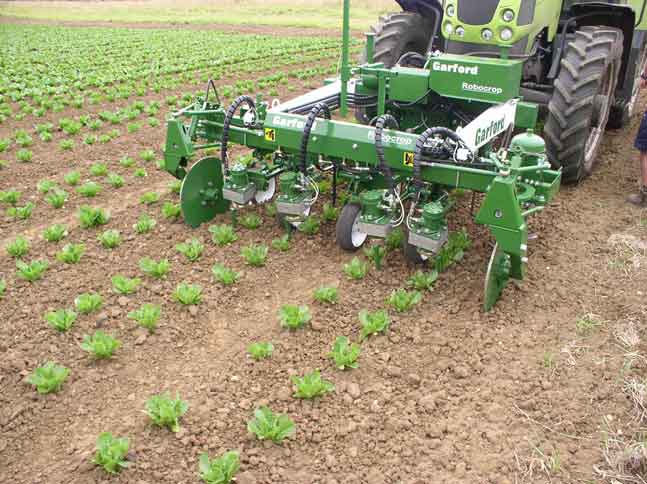
The Weed Twister and other hand tools of its class that we will examine and compare in this paper, are all fairly simple in design, have few, if any, moving parts, and, for the most part, are not motorized. With all the technology available in California, often housed in the same valleys which nurture our bountiful crops, we are not yet at the point where we are discussing more sophisticated tools. A classification and comparison of other hand tools used primarily in home gardens is presented on the Weeder Features page. Perhaps the new regulations may spur the imagination of California's technology leaders to invent the laser weeder, for example. Imagine a light weight laser wand that can exterminate any weed of any size and shape with a lightning-quick zap? Could the next evolution be the robo weeder? Visualize the robotic rover automatically weaving through the fields and deftly taking out each enemy by intelligently making the identity and status of every growing thing in its path. Recent advances in online graphic object recognition, such as the work being done by Microsoft, may eventually lead to uploading images of plants by cell phone and receiving a species identification search response. Robotic Cultivator System Sometime within the next few years, though, there may be a new mechanized weeding system available to growers, which will save them hundreds of dollars per acre. Over the past three years, David Slaughter, a researcher at the University of California-Davis, has been working on perfecting a precision weed control robotic cultivator system that can tell the difference between weed seedlings and tomato seedlings in the field. On the back of the mechanism, there would be several mounted miniature hooded sprayers that would go in between the rows and spot spray the weeds, leaving the tomato plants and everything else in the field untouched.
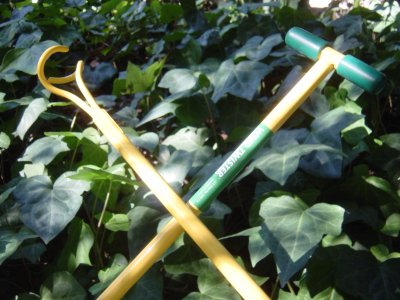
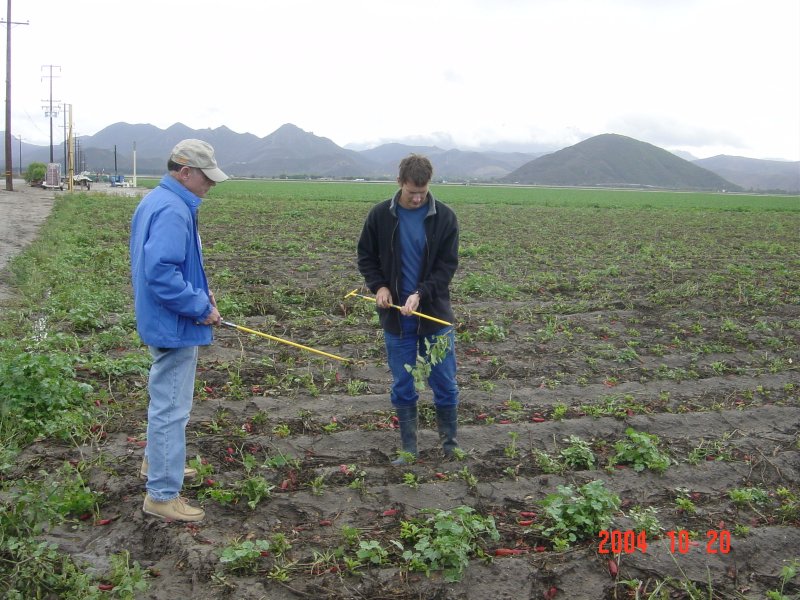
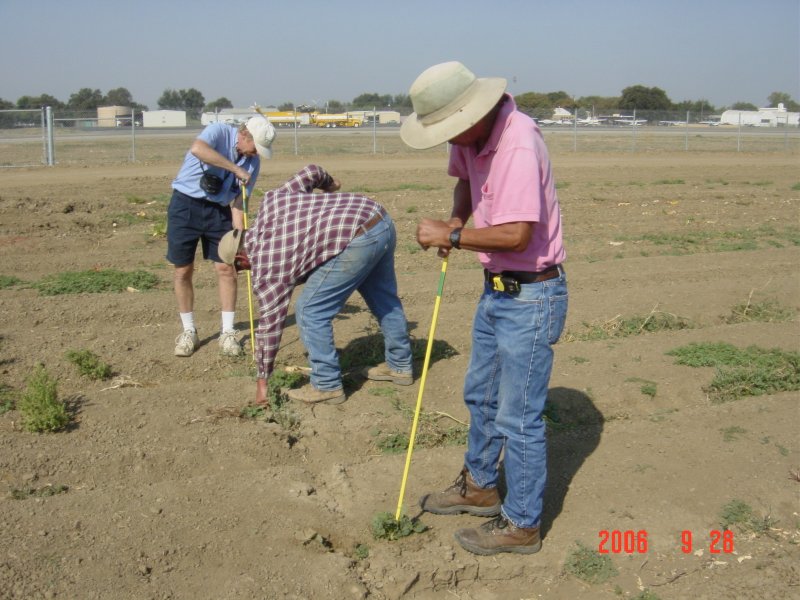
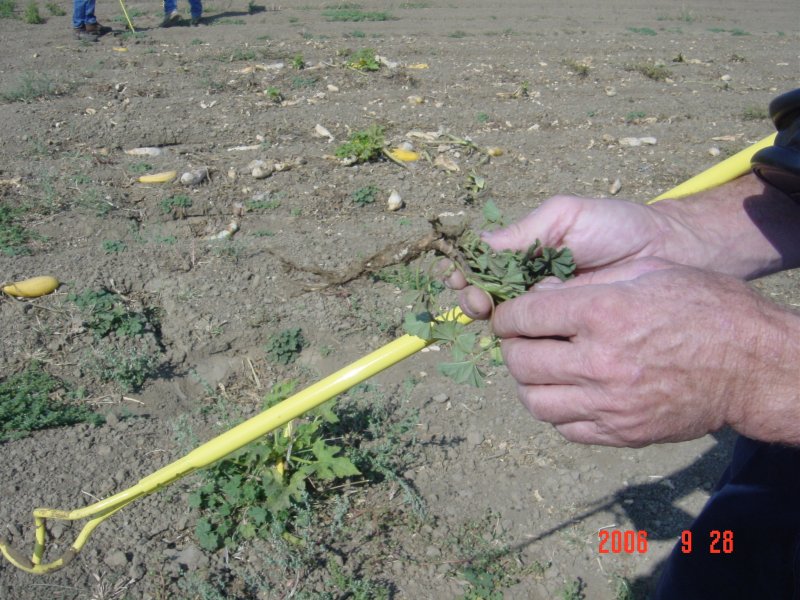
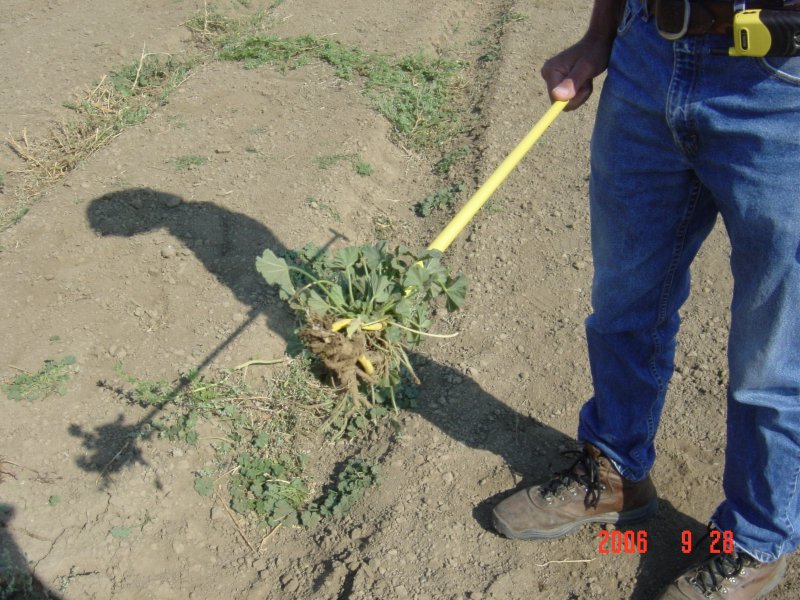
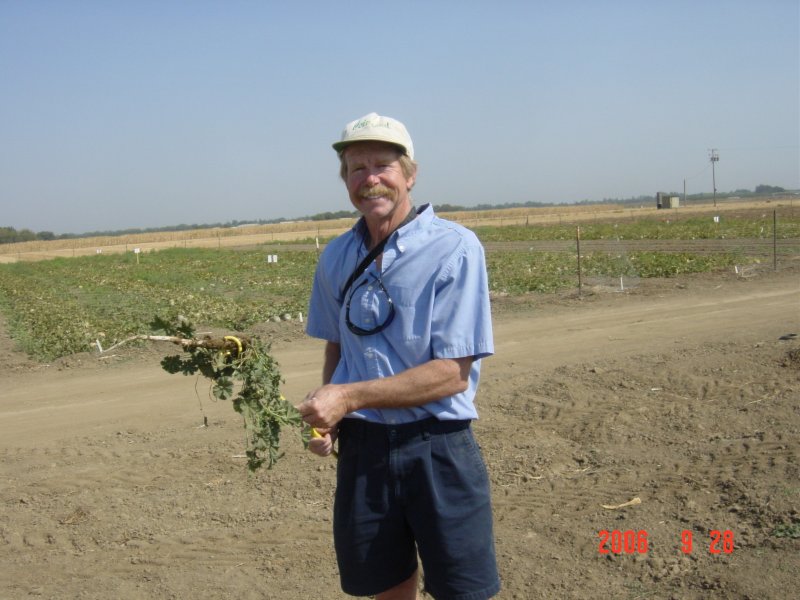
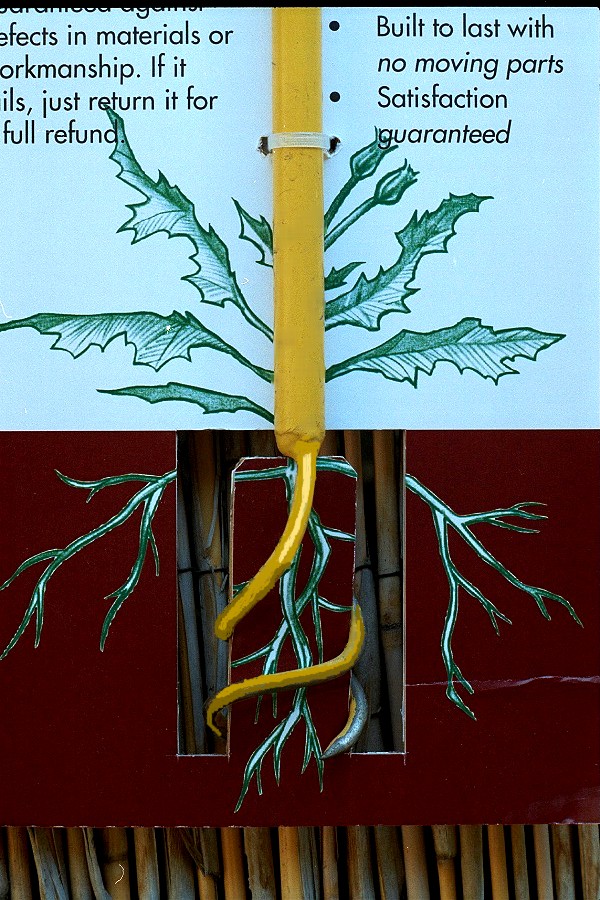
We acknowledge that new technology is often a double edged sword. New jobs are created and old jobs are eliminated. More efficiency usually means lower cost and less people on the payroll. Politics and legal conflict have brought us to the historical point where we are today examining new and old methods of precisely removing weeds. The grower will benefit by better tools and methods of precise weed removal regardless of the political context of the day. More efficient and ergonomic tools will be of value to both growers and laborers whether or not traditional methods are restricted by society. ERGONICA WEED TWISTER Although we're not talking about the robo weeder or the laser weeder here, the patented double helix design of the Ergonica Weed Twister is an advanced state of the art of probing and pulling out weeds by the roots in a precise and efficient manner. Its pointed double coils are designed to efficiently penetrate the soil and can be used to screw deeply into the root structure of the weed. The coils can also be applied as a circle-shaped hoe, gliding along a shallow path beneath the surface of the soil to unearth new weeds and seedlings with very short root structures. Both the deep root extracting and the shallow depth hoeing applications of the Weed Twister are of special importance to precise weeding in the agricultural setting. We will examine these and other features more analytically in comparison to competing designs below. Several Weed Twister features have ergonomic value. The name of the manufacturer, Ergonica, was derived from "Ergonomic America." The standard model is 36 inches in length and weighs about one pound. This design has been in production and distribution through internet marketing in the United States for several years. Although it has never been distributed through normal retail channels, the Weed Twister has thousands of happy customers who often come back and buy extra Weed Twisters as gifts for their friends. A few nursery stores in southern California also carry the original 36-inch Weed Twister model. In the agricultural setting, a longer handle prototype has been designed for testing and development and is now available for online purchase. We have recently tested a 42-inch and 48-inch Weed Twister model in several farms in Oxnard and Davis, California, where we successfully removed such weeds as little mallow, goosefoot, yellow nutsedge, purslane, nightshades and lambsquarters. These were preliminary tests aided by the UC Cooperative Extension and limited in scope with the intent of evaluating the general applicability of this tool in agriculture and to compare the ergonomics of the various Weed Twister models. These initial agricultural tests have also led to refinements in the design of the tool including the sharpening of the thicker coiled tines, the optional 8-inch T-handle expansion kit, and the addition of the bar grip in the 54-inch model for increased torque strength and speed when twisting into deep roots in clay soil.
While fully automated robotic weeding machines are still in the development and testing phases, it appears that a semi-automated solution, such as a drill-powered device may provide relief to weed pressure without excessive labor costs. Perhaps a robotic device may be hooked up with a Turbo Weed Twister instead of a jet of chemicals? What it takes is possibly looking outside the box of chemicals, as productive as they have been in the recent decades, and looking for quicker and more efficient plant removing mechanical tools controlled by robotic weed detection and guidance systems. CLASSIFICATION STANDARDS To meaningfully compare competitive tools and technologies we need to determine the definitions of the applicable classes. We offer the definitions of the classes we have used as examples to use for reference only. If needed, we expect the industries involved as well as the appropriate regulating bodies will more formally establish appropriate standards. Ergonomic - Long Handle The Ergonomic handle has a length of at least 30 inches. This is also known as the Long Handle and the Back-Saving Handle. The standard model of the Weed Twister, with a length of 36 inches, fits into this standard. A number of other weeders listed on this website also comply with this standard. A sub-class of this with a length of at least 45 inches is the Extra Long Handle or Industrial Length Handle. The 48-inch and 54-inch Industrial Weed Twister models fit into this class. The Full Length Handle has a length of at least 60 inches. It should be noted that current Cal OSHSB regulations define long-handled tools as those with handles at least 48 inches in length. The latest regulations restrict the use of either long-handled or short-handled weeding tools from a stooped, kneeling or squatting position. The 48-inch Weed Twister model and the 54-inch Dual Grip Weed Twister model would both be acceptable for agricultural use in California. Hand weeding may be acceptable under the new regulations in situations where it is proven to be the only practical way to effectively remove weeds without damaging crops. Light Weight We define a Light Weight hand weeder as a tool with a weight of 2 pounds or less. A sub-class of this standard would be the Very Light Weight standard with a weight of one pound or less. The standard Weed Twister, with a weight of one pound, falls into the Very Light Weight classification. The 48-inch Weed Twister weighs less than two pounds and the 54-inch model with the added bar grip weights 3 pounds. These standards are appropriate only for the Long Handle tools as defined above. Precision Weed Removal Tool The measure of precision is inversely related to the dimensions of the action point of the weed removal tool. In other words, a 3-inch hoe blade is more precise than a 5-inch hoe blade. We have used a maximum of 3 inches in width to determine the classification of a tool as Precise. Most of the hand weeders that are claimed by their manufacturers to be "precise" on the market today fit within the 3-inch standard. We have extended this class to smaller dimensions by defining the Very Precise class as a tool with an action point width of 2 inches or less. The Extremely Precise tool has a dimension of one inch or less. The Weed Twister standard model has a width of 2 inches in diameter and is thereby classified as Very Precise. Because of the forceful manner by which a hoe is normally applied to the target area, that is with a hammering or hacking motion, the effective precision of this tool may be compromised. The hacking motion exposes to possible damage anything in the path of the tool and handle as it is applied. With the swift motion, it also requires great accuracy to hit the target precisely and effectively. Every hack increases the possibility of damage to nearby plants. This increases the effective precision area for a 3-inch hoe blade to possibly 6 inches or more. Even the short hoe requires a relatively violent motion compared with the Weed Twister and other precision tools on the market today. Thus, a 3-inch hoe may effectively be not precise since its normal use required by its design exposes to damage an area greater than 3 inches. STANDARD CLASSIFICATIONS AND ECONOMIC / ERGONOMIC TRADE-OFFS When I bought my Chevy Suburban a couple of years ago, I selected it with the purpose of carrying bulky loads of Weed Twisters to various locations for marketing, trade shows, distribution, etc. It's classified as a truck, and when used as a truck, it is very efficient. When it's used to drive me alone with no payload across town to visit friends, it's relatively inefficient. The standard Weed Twister is a Long Handle, Very Light Weight, Very Precise hand weeder. When comparing it to other tools, the comparisons should be made against other tools in the same class. The agricultural models with 48 and 54 inch handles are in a different class. These models are Extra Long Handle, Light Weight, Very Precise hand weeders. If we expand the diameter of the coils of the Weed Twister, we may change it from the Very Precise class to the Precise class.
We propose more tests in agricultural settings with perhaps several lengths to determine the optimum trade-off. There are actually two advantages to shorter Weed Twister lengths: 1) less weight, and 2) more efficient motion depending on the distance between the worker's hands and the target weeds. We may also find that the optimum length may depend somewhat on the height of the worker. In this case, we may offer the grower the option to purchase a number of tools at different lengths, and allow each worker to pick the tool he or she finds to be most comfortable and efficient for himself or herself. There may also be trade-offs in efficiency when modifying a tool to be more precise. For example, a 3-inch hoe blade may be less efficient than a 5-inch hoe blade because it takes more work to cover a larger area. However, it may be less effective when 3-inch precision is necessary to protect the crops. The need for precision is the justification for using relatively inefficient tools. Depending on how much precision is needed, relatively less efficient tools may be appropriately selected. We would not be looking at hand tools at all, if the required precision and care for all of our crops could be accomplished with tractor-driven solutions or chemicals.
HAND WEEDING VS USING HAND TOOLS Hand weeding without tools may arguably be cheaper in some situations than hand weeding with tools, or mechanical hand weeding. However, without the proper equipment, the worker will often tear off the top of the weed and leave the roots in ground. Not only is this an arduous task and damaging to the health of the worker, but it also may be less efficient when compared with mechanical hand weeding, depending on the types of tools available for this purpose. In other words, when using the most appropriate ergonomic tools for the situation at hand, the grower can efficiently "Wipe out the weeds, not the workers!" If children are employed in hand weeding, refer to the North American Guidelines for Children's Agricultural Tasks for care in preventing injury to children. Some of these guidelines make a lot of sense for adults in some situations, as well. According to the American Society of Hand Therapists, repetitive movements such as raking, weeding, digging and pruning are stressful on hand and wrist ligaments and can cause tendonitis and Carpal Tunnel Syndrome.
In California, the traditional use of the short hoe is not currently a legal option. Weeding by hand is restricted in agriculture to situations where it can be proven to be necessary. Organic farmers do not have the same restrictions that other farmers have in the new regulations. The logic behind this variation is based not on ergonomics, but on the economic requirement for extensive hand weeding for organic farming to be productive. As stated above, whether required or restricted by law or not, tools that are more efficient than hand weeding or the short hoe will be of value to all farmers that require precision weeding or thinning assuming they have an opportunity to evaluate and select the best tools for the job at hand. Many of the conditions that have traditionally called for hand weeding can be efficiently overcome by the Weed Twister as will be described below. CIRCLE HOES AND THE WEED TWISTER To analyze the benefits of the circle hoe, we examine it's features here in a generic sense. This design is a band of thin metal shaped like a wedding band with a diameter of several inches and a band width of less than an inch. The circular band is supported by a pivoting structure or rigid clamp attached to a full-length handle. Depending on the dimensions of the circle diameter, various levels of precision can be provided by this type of tool. Like other hoes, the circle hoe is relatively effective in tilling the soil and unearthing unwanted seedlings and small weeds with shallow roots. When this tool encounters deeper roots, it may cut the roots or, depending on the size and strength of the root fibers, may simply get stuck or stopped by the roots. If there is a need to remove weeds with roots intact that are deeper than a few inches, the circle hoe will not be effective. The standard flat-blade hoe will be more effective in this case than the circle hoe, but unless careful hacking motions are applied to dig along side the roots, the flat edge hoe will not be effective in removing deep roots. The Weed Twister coils have a circular shape that when scraped along the top of the soil can fairly efficiently slip underneath small seedlings with shallow roots much like the action of a precise circle hoe. One difference is that the coils of the Weed Twister do not have a sharp edge like the edge of the circle hoe or straight hoe. This means that the Weed Twister is less likely to cut and more likely to pull small or large roots when scraped near the surface of the soil. When a larger weed is encountered, the Weed Twister can be applied in either a twisting or hooking motion to safely dig into the deeper root system. In an agricultural setting where the soil is generally well-cultivated, a hooking motion may be sufficient to remove many larger weeds without the need for twisting. Twisting is very effective in removing larger weeds, moreso than any other method, but requires work, and should be used only as a last resort. More discussion on the various techniques of hoeing, hooking and twisting with the Weed Twister will follow. HOE DESIGN VARIATIONS AND THE WEED TWISTER There are a number of innovative precise hoe blade design variations that are listed on the Weeder Features page and elsewhere for comparison. One common issue with all of these designs is that they have a relatively sharp edge which will very likely cut the roots of a large weed if applied carelessly. Like the traditional hoe and the circle hoe, the various blade designs are intended to till and cultivate the soil and remove small weeds with shallow roots. None are intended to effectively remove the root systems of larger weeds. If a grower needs to precisely remove small weeds, there may be a value in examining several of those we list on this website including the wing-shaped blades, V-shaped blades, double V-shaped blades, heart-shaped hoe, scuffle hoe with serrated edges, and half-moon shaped blades. The hula hoe is shaped like a rectangular circle hoe and is similar to the scuffle hoe with a pivoting action. This hoe has been used in some horticultural settings with efficient outcomes as long as the weed growth is limited to short roots. Many of these tools will not be found in your local hardware store, so the list on this website may be a good starting point for research on alternative hoe designs. A variety of these hoes and other hand tools, mostly available online are identified on the Garden Tools page. When precision weeding is required, the ultimate solution may be to arm the workers with both a precise hoe, like the hula hoe, and the Weed Twister. The hula hoe can cover a larger span of short-rooted weeds, and the Weed Twister can be pulled out of its holster when more precision is needed or when the roots run deeper than 3-4 inches. PRONG SHAPED WEEDERS AND THE WEED TWISTER Several traditional weeders have fairly straight prongs, some with curves and grooves, and others with short and long handles. Prongs are the generic weeders of the past. Long handled prongs have back-saving advantages over short-handled prongs. Prongs are more effective than hoes in penetrating deeply into the soil to attack larger root systems. The longer the handle, the more leverage can be applied to extract larger plants. To be effective, the prong has to be accurately guided into the base of the root system in order to loosen the roots from the earth with as few strokes as possible. Often the worker will grab the top of a plant with one hand and poke the prong into the roots with the other. This two-handed process cannot be easily coordinated with a long handle prong. Therefore, the ergonomics of this tool is compromised. Only if the plant is several feet tall will the worker be able to grab the top of the plant with one hand and stick a long prong into the roots at the same time with the other hand. Grabbing the top end of a large plant may result in breaking the plant if the prong has not fully loosened the root. The Weed Twister may require a little more effort than the prong to penetrate a depth of several inches. Although it doesn't take any more strength, the Weed Twister requires a twisting action as opposed to the straight pushing or poking action of the prong. Once the tool reaches the root system, however, the Weed Twister has advantages not enjoyed by the prong. The twisting motion of the Weed Twister will engage the root system and twist the entire root while still in the soil. The apex of the double coils is carefully designed to grab the root structure that has already been loosened by the coils and force it to dance the Weed Twister Waltz. Once embraced, the roots will completely disengage from the soil after one or two twists. The Weed Twister Waltz lifts the weed off her feet! Once she begins to spin, it is safe to gently lift her out of the soil with very little effort. A graceful exit from stage left! In contrast, once the prong reaches the main root system, it can only move laterally like a lever. Oftentimes it will simply slip off the main root stem with very little impact. It may take several thrusts and pushing efforts with the prong to loosen the roots from the soil and ultimately it still requires one or two hands to extract the weed from the soil. Both tools have the problem of occasionally missing a central point in the root system that allows for effective removal. The straight tap root is more difficult to hit by either tool, especially when it angles off in a direction that is not clearly predictable by the visible growth. The 2-inch diameter of the Weed Twister coils gives the Weed Twister a slight advantage in hitting target the first time over the prong with a 1-inch or smaller diameter. The more branches and networks in the roots, the more easy it is for the Weed Twister to snatch the roots and twist them into orbit. This advantage is not enjoyed by the prong. The Weed Twister is more effective in grabbing and loosening both the tap root and the branched root than the prong. There is no competition in this regard by prongs, hoes or other shapes.
OTHER WEED TWISTERS VS THE ERGONICA WEED TWISTER There are two other manufacturers that we know of that distribute a product called a "weed twister." There have also been several other products that feature a twisting motion for cultivation but not necessarily weeding. The twisting concept in weeding and cultivating seems to have caught on in the consumer market! One competing weed twister is made by Hastings. This tool has four straight tines in a parallel array. The tines have a length of about 4 inches and are arranged like a square when observed from the pointed ends. Although this tool is nominally designed for twisting, the tool does not have the coil shape of the Ergonica Weed Twister to allow for efficient penetration and twisting into the soil. We have also recently observed that the Hasting website is not functional at this time, which may mean that the tool is no longer available. The Rittenhouse weed twister is a prong with a wedge-shaped blade oriented like half an arrowhead. The handle includes a protrusion for foot support. The operation of this tool involves poking the arrowhead into the roots of a weed like a dandelion and pushing the protrusion with one foot. After penetrating the soil, the user twists the long handle and lifts the tool. The problems with this design are twofold. One, using the foot can cause more fatigue and stress than the hands-only methods of the Ergonica Weed Twister and most other tools. Two, the half-arrowhead design is not one that will effectively or efficiently twist and engage the roots. The coils of the Ergonica Weed Twister allow it to penetrate more deeply into the soil than the Rittenhouse tool. The coils allow for more efficient twisting without the friction caused by the Rittenhouse half-arrowhead. OTHER HAND TOOL DESIGNS We have noted a few interesting alternatives but none that we believe may be of value to this discussion in the agricultural setting. For example, one tool has several nail-like tines that are intended to surround a dandelion plant and grab the entire plant when a foot lever is pressed. This is a rather heavy and clumsy tool and can only be applied to weeds with short roots of no more than three or four inches. Another extreme is a super-large wrench device that can effectively remove fairly large plants as tall as several feet. For the agricultural scenarios in California, this size of weeds is not anticipated. There is also a motorized twisting tool shaped like an extended paint-mixing prong. This design has some potential advantages, but the disadvantages appear to be out of balance. In addition to the weight and cost of a separate drill-type motor tool, once the weed is removed by the tool, the weed is usually wrapped extensively around the prong, requiring a lot of work to unwind the weed. If the prong does not hit target, the result will often be a broken plant stem. This tool may potentially work better when combined with a motorized rotating accessory that is specifically designed for this purpose. This accessory would feature a slower speed than most power drills allow and an easy way to reverse the direction to unwind the entangled weeds. We would encourage inventors and manufacturers to continue working on the development of a motorized twisting tool. The Weed Twister patent also includes a motorized version which has not yet been developed for commercial production. HERBICIDES AND REGISTRATION The Weed Twister does not require registration for any crop as needed for dangerous herbicides such as ethofumesate, prometryn, ethalfluralin, edothall, Stinger, metribuzin, Casoron, Flex, flumetsulam, Kerb or Visor, to name a few. Safety and vigorous growth for all crops, workers and the ecology is protected and enhanced by the Weed Twister, beyond the capability of any chemical to date as well as many other mechanical applications. Register the label for the Weed Twister as "safe and healthy" for all crops including carrots, onions, celery, strawberries, grapes or peppers as well as yourself, your family, workers, pets, bugs and worms. Some growers try to advance their profits by profiling the traditional practices of big ag corporations. In the era of sustainable agriculture, the question is: "Are there new methods and tools suitable for sustainable agriculture?". Many innovative and suitable solutions today have not been evaluated or tested appropriately by large corporations, traditional experts, farm advisors and master gardeners. Forward-looking growers may find it profitable to take part in testing new tools, such as the Weed Twister, along with other biodynamic and permaculture methods. ERGONICA WEED TWISTER TECHNIQUES FOR AGRICULTURE Several techniques and options for using the Ergonica Weed Twister are more appropriate for agriculture than for home consumer use. An exhaustive list of home consumer techniques and applications can be seen on the Weed Twister website. For agriculture, an efficient, ergonomic set of techniques is necessary. These techniques are based on the premise that the agricultural worker may be called upon to remove weeds for several hours in one day. An ergonomic design becomes more critical when fatigue and repetitive motion are anticipated. Not only can the Weed Twister be applied to open furrows, but it is also effective in nursery containers of various sizes due to the Weed Twister's exceptional precision. Hoeing, Hooking and Twisting The new worker should be given a thorough orientation on how to safely and efficiently hoe, hook and twist with the Weed Twister. This orientation will greatly increase efficiency and reduce strain and effort for the worker. In the game of poker you have to know when to hold them or fold them. When using the versatile Weed Twister, you have to know when it's best to hoe, hook or twist, depending on the weed type, size and shape as well as soil conditions. Much of this judgment process can only come from the worker's experience with specific crops and specific weeds and soil conditions. Because of this judgment process, there will very likely be a number of workers who enjoy superior performance than other workers. These Expert Weed Twisters may become the trainers to orient new users of this tool. Hoeing with the Weed Twister has been presented in previous tool comparisons. The decision to hoe with the Weed Twister is based on the identification of small weeds with shallow roots. Another factor will be the condition of the soil. Soil that is more compacted may not lend itself to hoeing by the Weed Twister. In most cases, however, small growths of new weeds with roots as deep as 2-4 inches or so can be easily and precisely unearthed by sliding the Weed Twister in a pulling (not twisting) motion much like the application of a traditional flat-edged hoe. When small weeds are growing in tight areas between furrows, for example, the circular edge of the Weed Twister can be safely extended to unearth these intruders. For larger areas where precision is not as critical, other less precise hoes may be used to cover more ground with less effort. Small weeds with no flowers or seeds can safely and efficiently be unearthed in this manner with no concern about removing the debris from the ground. Hooking is appropriate for slightly larger weeds with larger root systems. Whereas hoeing involves a pulling motion towards the worker, hooking involves sliding the tool sideways from right to left to take advantage of the clockwise spiral of the coils. Hooking is more of a jabbing and grabbing motion in soil depths of about 3-6 inches. When you look at the coils of the Weed Twister from different angles you can see a circle, a hook or a spiral shape. Likewise, the effective action of the tool can change when applying it from different angles and with different motions. This is where training and experience come into play. Some users immediately "see" the engineering and geometric potential of the Weed Twister at a glance. It's like love at first sight! Others require more training and practice. The skill in hooking is knowing when it's appropriate and how to orient and move the tool towards the target. When the soil is relatively loose, it's fairly easy to push the coils as a hook beneath the main root system and pull out the entire plant with very little, if any, twisting. Hooking is also an effective method to remove larger weeds in nursery containers depending on the size of the container and proximity to the crop plants. The 2-inch precision is ideal for protecting valuable plants in containers. In larger containers, the hoeing method may also be effective. Twisting is the classic motion reserved for larger weeds and deeper roots. These are plants with roots that need to be fully engaged in the coils in order to be twisted and detached from the soil. Twisting is the most efficient method for loosening larger root structures from the soil without rupturing the central core of the roots. Other tool designs require either digging a large hole or carefully poking prods into the roots in a hit-or-miss fashion to eventually free the root structure from the soil. Once the root filaments have been loosened from the surrounding soil, the entire plant will begin to rotate more freely along with the Weed Twister shaft. The Weed Twister Waltz, as described above, is an efficient and graceful method of lifting the weed off the ground. The user will feel a reduction in resistance against the twisting motion when the weed is ready for lift off. At this point, it is safe to simply lift the tool and the entire root system and plant will follow. Twisting requires less lateral space than either hoeing or hooking and therefore can be applied safely to horticultural containers or narrow spaces where weed roots have grown to greater depths. Even when weeds are immediately next to the crop growth, or intermixed, the twisting method can safely be applied. Since no soil is thrown into the air with the twisting motion, in contrast to the traditional blade hoeing motion, there is little danger of accidentally dusting the crop with soil. Twisting can also safely be applied underneath grape vines and other large plants, vines, trees and cacti on plains and hillsides because of its precision and because no rapid hacking is used as with the motion of the traditional hoe. In many cases, twisting can safely be applied underneath plastic mulch, covers and netting by using the coils to partially lift the covers and reach directly into the weeds. Twisting is also the most effective method for removing branched root systems such as those of grasses, like St. Augustine grass, for example, and other plants with networked roots. The coils can be used to look or 'fish' for unseen roots by twisting and hoeing into suspect areas where visible weeds have been removed. Once found, these roots can be snared and removed by the twisting motion. Even if some root parts remain, by periodically twisting and hoeing in the same area the weeds will ultimately be completely removed. Removing the Plug and Debris Twisting or hooking normally results in the deposit of a plug of soil in the center of the Weed Twister coil along with the entire plant that was removed. In home gardens, the gardener will usually grab the debris with the free hand and tug it out of the coil. If a rock, tree trunk, tool handle, or other hard surface is nearby, tapping the coil against the hard object will cause the plug to loosen and the rest of the debris will usually fall off by gravity or gentle pulling. Tapping a hard surface to remove the plug presents a minor logistical issue in an agricultural setting where hard surfaces are generally not found. If a standard hoe is nearby, however, the wooden handle of the hoe will make an excellent tapping object. Otherwise, an accessory object with a hard surface will be needed to take advantage of the tapping technique. Accessories The optional accessory tapping object may take any of several shapes. For example, a simple piece of wood may be placed on the path on which the user is working. This piece of wood may be a few feet in length and may be moved ahead of the worker every few minutes. Another type of tapping object may be a hard surface strapped to the worker's boot and / or shin. For ergonomic protection, a shin guard or safety boots may be used to support the tapping object. It should be noted that even without these tapping accessories, it is not difficult to grab the debris in the coil of the Weed Twister and remove it with a simple tugging motion. The tapping objects should be viewed as optional accessories to increase the efficiency of a system that is inherently more efficient than other alternatives currently available. The Weed Twister is light enough to hang on a tool belt or harness worn by the worker. A special belt or harness may be configured to hold the Weed Twister when not in use as well as other small tools and helpful objects and supplies such as gloves, knee pads and water bottles, for example. A harness may also be used to strap the Weed Twister on the back of the worker where it can be reached over the shoulder. The Weed Twister is lighter than most hoes which allows the worker the option of safely holding it in one hand while handling other objects. It can also be temporarily planted into the ground with a screwing motion to allow the worker to use both hands for other tasks. The following table describes the comparison between the effectiveness of various hand weeding tools described in this paper: Hand Weeding Tools Effectiveness by Features, Root Types and California Regulations
| |||||||||||||||||||||||||||||||||||||||||||||||||||||||||||||||||||||||||||||||||||||||||||||||||||||||||||||